 Melbourne Metropolitan Area, VIC, Australia
 admin@loftelectricalgroup.com.au
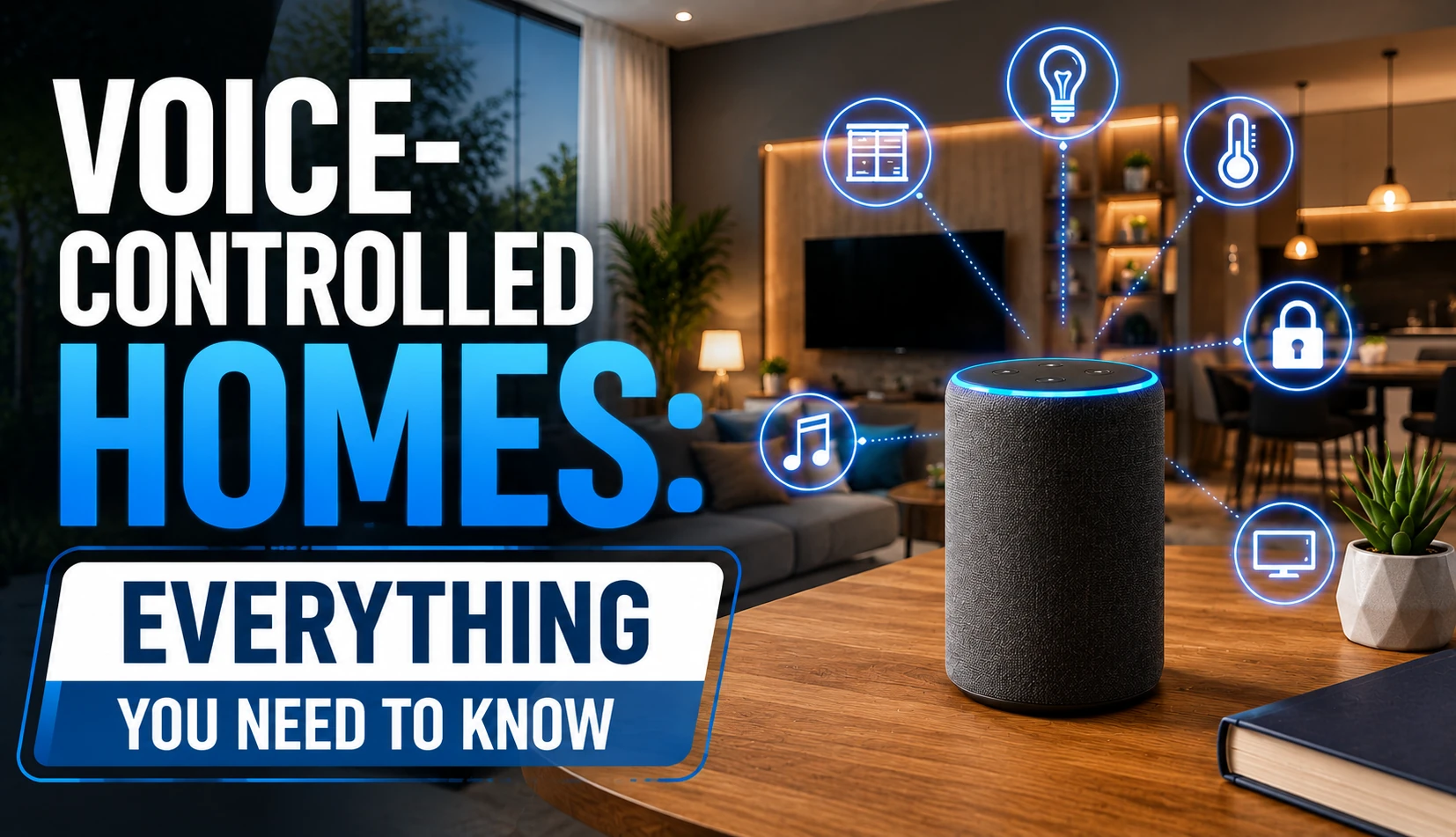
Technology has changed the way people use their homes. Today, you can control lights, appliances, entertainment systems, security devices, and other home features with simple voice commands.
A voice controlled smart home can make everyday tasks easier and more convenient. Instead of looking for switches or using different apps, you can use your voice to control compatible smart devices.
Voice control can be useful for busy families, older people, people with limited mobility, and anyone who wants a more convenient home.
This guide explains how voice-controlled homes work, what devices you can control, and what you should consider before setting up a smart home.
What Is a Voice-Controlled Smart Home?
A voice-controlled smart home uses connected devices that respond to spoken commands.
You can use a compatible voice assistant to give instructions such as:
- Turn the lights on.
- Turn the lights off.
- Adjust the room temperature.
- Play music.
- Lock compatible doors.
- Start a smart appliance.
- Open or close compatible blinds.
- Check connected security devices.
The exact functions depend on the smart devices installed in your home.
A voice controlled smart home connects compatible devices through a smart home system, allowing you to control different parts of your home more easily.
How Does Voice Control Work?
Voice-controlled technology uses a combination of smart devices, internet connectivity, voice assistants, and compatible applications.
The basic process is simple:
- You speak a command.
- A voice assistant receives the command.
- The system understands what you are asking.
- The connected device receives the instruction.
- The device performs the requested action.
For example, you might say, “Turn off the living room lights.” If your lighting system supports voice control, the lights can respond to the command.
What Do You Need?
A basic voice-controlled setup may require:
- A compatible voice assistant
- Smart lights or other compatible devices
- A reliable home network
- Compatible apps or a central smart home platform
- Professional installation for certain electrical or integrated systems
Not every device works with every voice assistant, so compatibility should be checked before purchasing equipment.
What Can You Control With Your Voice?
One of the biggest benefits of a voice-controlled home is the wide range of compatible devices available today.
You may be able to control:
Smart Lighting
Voice-controlled lighting can allow you to:
- Turn lights on and off
- Adjust brightness
- Control different rooms
- Create lighting routines
- Activate lighting scenes
For example, you could create a “movie night” routine that dims selected lights with one command.
Heating and Cooling
Compatible smart thermostats and climate-control systems can allow you to:
- Adjust temperature
- Change heating or cooling settings
- Check the current temperature
- Create scheduled settings
This can make temperature control more convenient.
Entertainment Systems
Voice control can also work with compatible:
- Televisions
- Speakers
- Sound systems
- Streaming devices
You may be able to play music, change volume, or start entertainment using simple commands.
Benefits of a Voice-Controlled Home
There are several reasons homeowners are choosing smart technology.
1. Convenience
You can control compatible devices without walking to a switch or searching for a remote.
This can be particularly useful when your hands are full or you are busy with other tasks.
2. Easy Daily Routines
Voice commands can simplify everyday routines.
You might use one command to:
- Turn off multiple lights
- Adjust the temperature
- Start entertainment
- Activate a smart home scene
A well-designed voice controlled smart home can reduce the number of small tasks you need to perform manually.
3. Accessibility
Voice control can make certain home functions easier for people who find traditional switches or controls difficult to use.
It can provide another way to interact with household systems without physically reaching every control.
4. Better Home Integration
Instead of using separate systems for every function, compatible smart devices can work together through a central platform.
This can make the home easier to manage.
Voice Control and Home Security
Smart technology can also be used with compatible security systems.
Depending on the products installed, voice commands may help you:
- Check connected cameras
- Control smart locks
- Turn security lighting on or off
- Check certain sensors
- Activate compatible security routines
However, security-related functions should be configured carefully.
Why Professional Setup Matters
Some smart security systems connect to electrical wiring or existing home infrastructure.
A qualified electrical professional can help ensure the installation is suitable for the property and meets applicable electrical requirements.
Can Voice Control Save Energy?
Voice control itself does not automatically reduce energy use.
However, smart technology can make it easier to manage how and when devices operate.
For example, you could use smart controls to:
- Turn lights off when they are not needed.
- Schedule compatible lighting.
- Adjust heating and cooling.
- Switch compatible devices off.
- Create automated routines.
The actual energy savings depend on how the system is configured and how the household uses it.
Voice Commands vs Smart Automation
Voice control and automation are related, but they are not exactly the same.
Voice Control
You give a direct command when you want something to happen. For example: “Turn off the kitchen lights.”
Smart Automation
The system performs an action automatically based on a schedule, sensor, or programmed routine.
For example:
- Lights turn on at sunset.
- Heating changes at a set time.
- Outdoor lights activate when motion is detected.
- Certain lights turn off when everyone leaves.
A voice controlled smart home can combine voice commands with automation to create a more convenient experience.
What Should You Consider Before Installing Smart Technology?
Before purchasing smart devices, think about how you want to use them.
Consider:
Your Main Goals
Decide what you want to control first.
You may want:
- Smart lighting
- Climate control
- Home entertainment
- Security
- Blinds
- Energy management
Start with the features that provide the most value to your household.
Device Compatibility
Not every smart device works with every platform.
Before buying anything, check:
- Voice assistant compatibility
- App compatibility
- Wi-Fi requirements
- Smart home platform compatibility
- Integration with existing systems
Your Home’s Electrical System
Some smart devices are simple plug-in products. Others may require electrical installation.
For hardwired smart lighting, switches, sensors, or other electrical equipment, professional installation may be the safest option.
Why Professional Electrical Installation Is Important
Smart home technology can involve more than connecting a device to Wi-Fi.
Some installations may involve:
- Electrical wiring
- Smart switches
- Lighting circuits
- Sensors
- Automated blinds
- Home networking
- Integrated control systems
Incorrect electrical work can create safety risks and may affect the operation of your equipment.
A qualified electrician can assess your home and help install compatible systems correctly.
Common Mistakes to Avoid
Avoid these common mistakes when creating a voice-controlled home:
- Buying devices without checking compatibility
- Installing too many systems at once
- Ignoring your home’s existing wiring
- Choosing devices without considering future expansion
- Relying on different apps for every device
- Installing electrical equipment without professional help
- Forgetting about network reliability
- Creating overly complicated automation routines
A simple and well-planned setup is often easier to use than a system filled with unnecessary features.
How to Build a Voice-Controlled Home Step by Step
You do not need to automate your entire home immediately.
Follow a simple approach:
Step 1: Identify Your Priorities
Choose the areas where smart technology would be most useful.
Step 2: Start Small
Consider starting with lighting or another simple smart system.
Step 3: Check Compatibility
Make sure your devices can work together.
Step 4: Plan Your Electrical Requirements
If hardwired devices are required, speak with a qualified electrician.
Step 5: Add Automation
Once the basic system works, consider adding schedules and routines.
Step 6: Expand Gradually
You can add more compatible devices as your needs change.
Why Choose Loft Electrical Group?
Creating a smart home involves both technology and electrical planning. Loft Electrical Group can help homeowners understand their electrical requirements and create solutions suited to their property.
Professional electrical support can be useful when installing:
- Smart lighting
- Smart switches
- Sensors
- Automated electrical systems
- Home entertainment wiring
- Other connected electrical equipment
A professional approach can help ensure your smart home system is installed safely and works properly with your existing electrical setup.
Final Thoughts
A voice-controlled home can make everyday life simpler, more convenient, and more connected.
The key benefits include:
- Easier control of compatible devices
- Convenient lighting management
- Simple entertainment control
- Flexible climate management
- Support for smart security
- Greater accessibility
- Custom automation
- The ability to expand your system over time
A voice controlled smart home does not need to be complicated. The best system is one that solves real problems and is easy for everyone in the household to use.
Before installing smart electrical equipment, consider your home’s existing systems, device compatibility, future requirements, and electrical safety.
Loft Electrical Group can help homeowners plan and manage electrical solutions that support modern smart home technology.